
I was listening to Dr. Scott Hahn and Dr. John Bergsma (whom I was honored to be a student of during my time at Franciscan University of Steubenville) from the St. Paul Center give their explanation of the readings for the Feast of the Epiphany, when I learned something so amazing that I just had to share it with you, my dear engaged friends! Go listen for yourself here! It is my prayer that through this blog you and I both will come to a greater intimacy with Jesus.
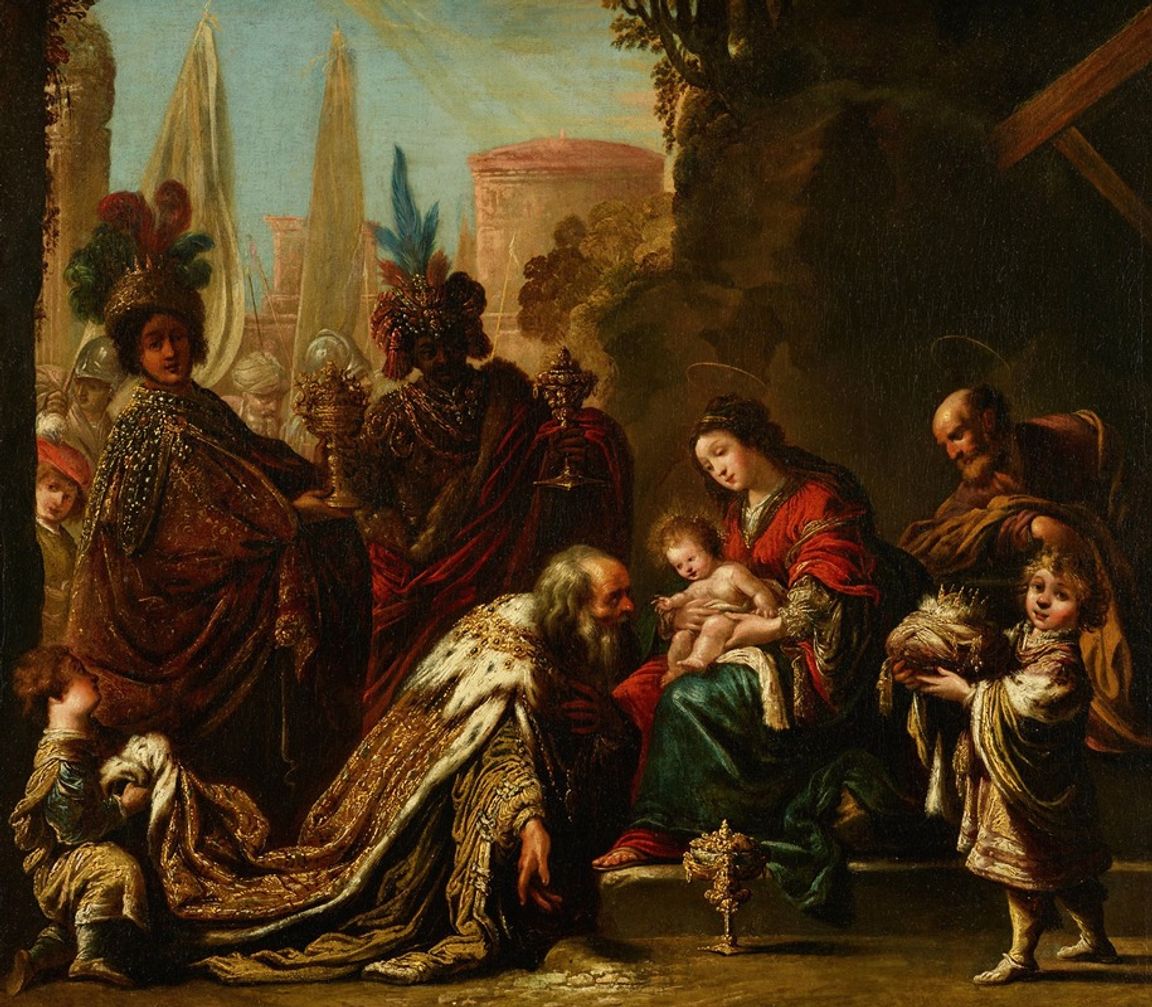
The magi were searching for a king and upon finding Him, they bowed down in worship and gave Him gifts. “[A]nd going into the house they saw the child with Mary his mother, and they fell down and worshiped him. Then, opening their treasures, they offered him gifts, gold and frankincense and myrrh” (Mt 2:11). You may have heard how the gifts of gold, frankincense and myrrh given by the magi to the little Jesus correspond to His kingship, His priesthood, and His preparation for death. This is worth reflecting upon, but did you know that the only place in the Bible that gold, frankincense and myrrh are mentioned together is the book Song of Songs? This blew my mind! I encourage you to read Song of Songs 1:11,13, 3:6, 4:6, 4:14. (I sincerely hope that you read the entire Song of Songs while you are at it). You will find other references scattered throughout the book as well. But what does this mean for us?
As Dr. Hahn puts it, the frankincense and myrrh that fills the Song of Songs is a call to communion, to intimacy, and to fruitfulness not only between the man and woman, but between God and mankind. The frankincense and myrrh in Jewish life were used for their romantic scent, worn to delight the beloved, while the frankincense and myrrh given to Christ by the magi was a foreshadowing of Christ consummating His love for us, His Church, on the Cross. After reading Song of Songs myself, I had a newfound understanding of how much love and divine intimacy God wants with us. He loves us just as the bride and bridegroom love one another in the love poetry of the Song of Songs! As Pope Benedict said about the Song of Songs in Deus Caritas Est (this past Christmas being the 20th anniversary of this amazing encyclical), “these love songs ultimately describe God's relation to man and man's relation to God… man can indeed enter into union with God.” Wow!
Also, as was pointed out by Dr. Hahn, the love between the man and woman was not consummated anywhere in the Song of Songs. Why is this, I wondered? Could this be because at the time of its composition, the second person of the Holy Trinity had not yet become man in Jesus Christ? Because this is prophetic love poetry, we as Christian now see that this love was consummated in Jesus on the Cross and is still consummated at every Mass! When we receive Jesus in Holy Communion, we consummate our union with our Eucharistic Lord. This union, this divine intimacy, is deeper than any earthly consummation between a man and his wife.
Before giving the little Jesus gifts, the magi, men of great wealth and of great knowledge, bowed down to the divine child king. They gazed upon Him and offered their gifts and love for the King. They adored Him in some of the first Eucharistic adoration! In the Song of Songs, I was thrilled to see a similar pattern to the path of the magi, and I called to mind my Dr. Bergsma’s lessons connecting the Song of Songs with Adoration. The beloved is seeking the bridegroom (cf. chapter 3) and upon finding him, adores him with the gaze of love (cf. chapter 4). Throughout the book Song of Songs, I can imagine Jesus looking at us through the glass of the monstrance in Eucharistic Adoration. You can notice especially the connection between Eucharistic Adoration and the Song of Songs with its words: “Behold, there he stands behind our wall, gazing in at the windows, looking through the lattice.” (2:9). I can just imagine the Lord waiting for us in Adoration; a simple glance from us gives Him such deep joy.
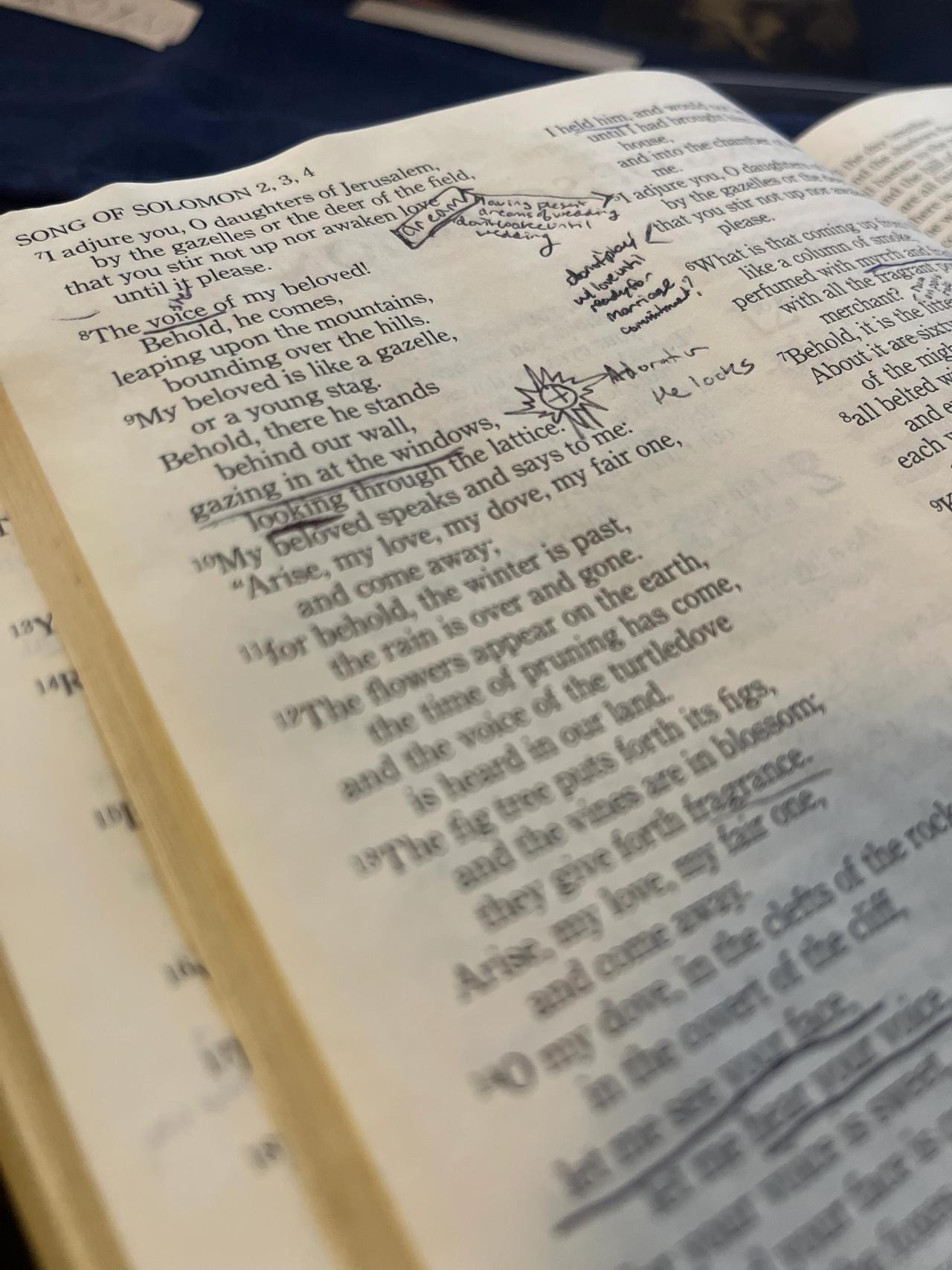
I remember when I met my now husband, Nick. We met in the summer of 2017 on the streets of downtown Columbus, Ohio. We had both just joined a group called Saint Paul Street Evangelization. We and a few others talked, prayed and gave out rosaries to everyone we met. Once, we were sitting on the dirty sidewalk with a homeless man, listening to him and talking with him as many other people were passing by, and I remember a simple look and a smile from Nick that I still remember to this day. (I’m sure you too can reminisce on the first time you met your fiancé.) This simple glance moved me so much; how much more the Lord Jesus loves to receive our gaze in Eucharistic Adoration. “You have ravished my heart, my sister my bride, you have ravished my heart with a glance of your eyes.” (4:9). There are many other poetic instances within the Song of Songs that will help you see the beautiful longing that our Lord has for us. I hope you take time to read through Song of Songs with these new eyes for Adoration and to ponder the thirst that God has for you. I know that I will!
The Magi were searching for a king, and they found a baby in a manger. Imagine the faith it took for them to adore, to prostrate themselves in worship before a child in the humblest of material circumstances. Let us have the faith of the Magi, let us gaze upon Christ in Eucharistic Adoration, worshipping Him and receiving Him at Holy Mass. He is waiting for us; He desires our gaze and desires to be in communion with us! During your engagement, reflect on the beautiful love that God has for us. Strive each and every day to grow in relationship with God, as you grow in relationship with your fiancé and prepare for your future marriage together. Your future marriage will be a sign of God’s love for His Church and, by God’s grace, will bear much fruit! So strive to make it to Adoration together! And speaking of fruit, my husband and I will be bringing our kids to see Christ in Adoration. What gifts will you bring?
Anna at Cana
Married December 15, 2018, at Saint Patrick Church in Columbus, Ohio // Mother of three on Earth and one in Heaven
PS. Enjoy the whole related paragraph from Pope Benedict’s Deus Caritas Est below. My husband thought it should be included.
The philosophical dimension to be noted in this biblical vision, and its importance from the standpoint of the history of religions, lies in the fact that on the one hand we find ourselves before a strictly metaphysical image of God: God is the absolute and ultimate source of all being; but this universal principle of creation—the Logos, primordial reason—is at the same time a lover with all the passion of a true love. Eros is thus supremely ennobled, yet at the same time it is so purified as to become one with agape. We can thus see how the reception of the Song of Songs in the canon of sacred Scripture was soon explained by the idea that these love songs ultimately describe God's relation to man and man's relation to God. Thus the Song of Songs became, both in Christian and Jewish literature, a source of mystical knowledge and experience, an expression of the essence of biblical faith: that man can indeed enter into union with God—his primordial aspiration. But this union is no mere fusion, a sinking in the nameless ocean of the Divine; it is a unity which creates love, a unity in which both God and man remain themselves and yet become fully one. As Saint Paul says: “He who is united to the Lord becomes one spirit with him” (1 Cor 6:17).