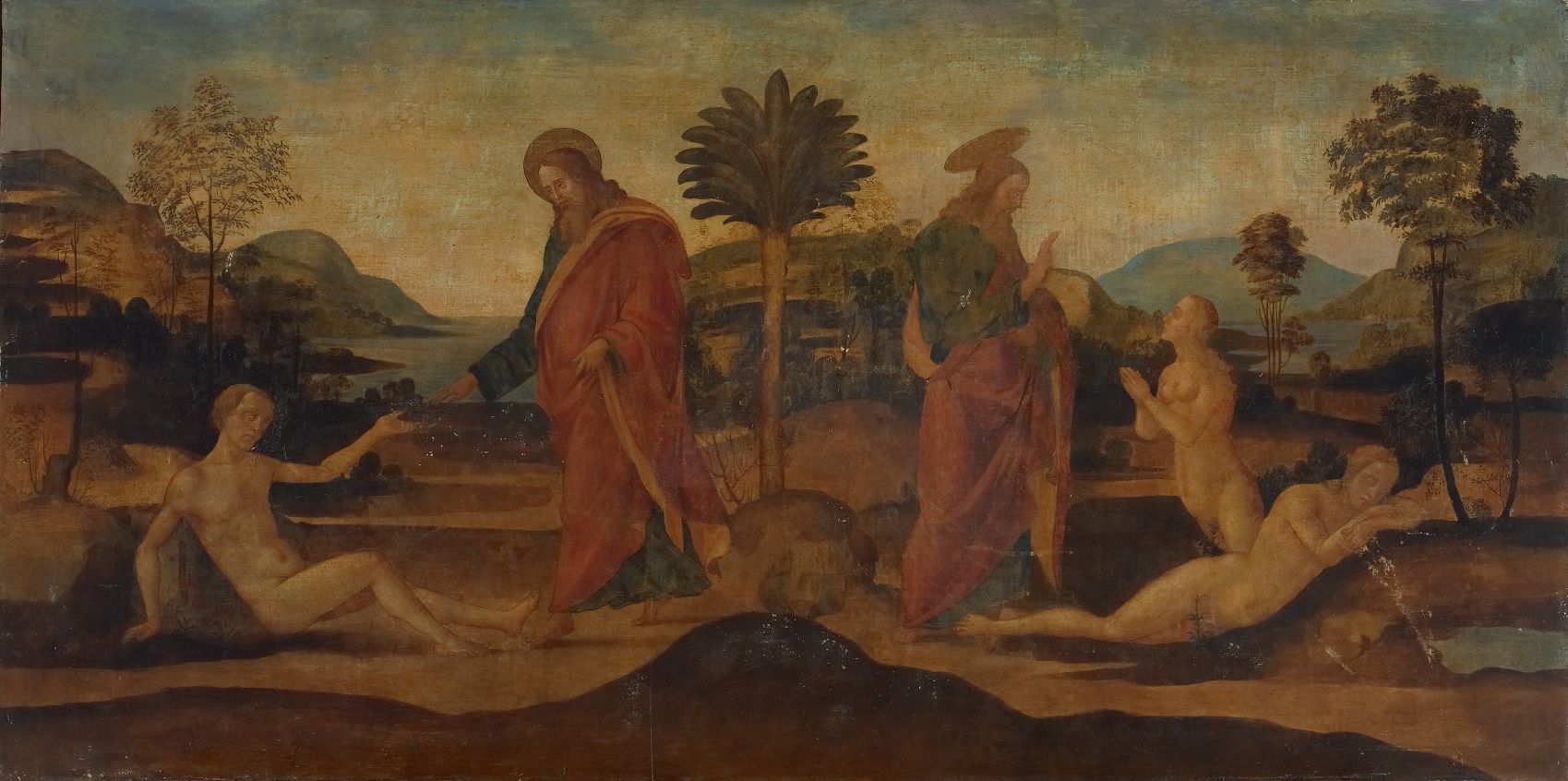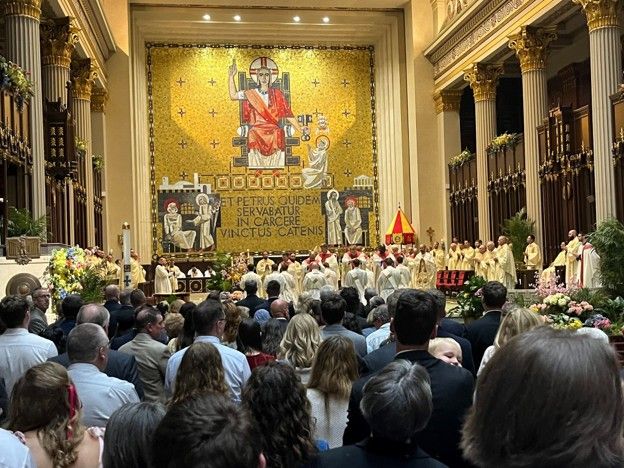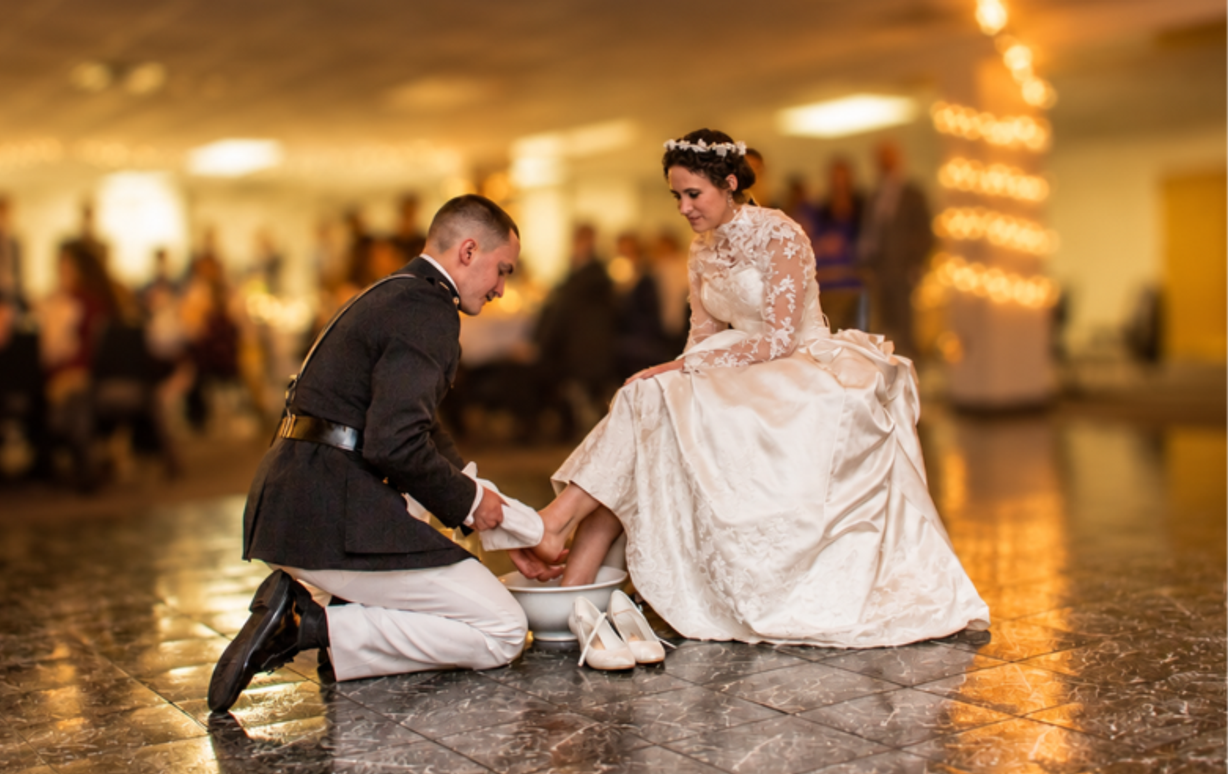
Catholicism is rich with symbolism, as is every detail of the nuptial mass. Everything you see, hear, and smell has meaning. For example, at your nuptial mass, the priest will wear white, indicating that it is a mass of great celebration (as he does during the Easter and Christmas seasons, feast days and ordinations), the rings themselves will become a sign of the marriage vows, the sweet smelling incense will represent our prayers raising up to heaven, the bells will get our attention for the consecration, and so much more. With such a rich symbolism in the nuptial mass, we wanted similarly rich symbolism at the reception, and I honestly could not understand the meaning behind removing the garter at the reception. Maybe it has deep theological significance in the dignity of marital intimacy, but I was not convinced at its face value. So, when planning our wedding reception, my husband and I decided to wash each others’ feet! It was something of appropriate intimacy, I thought, with significant and simple symbolism. We wound up washing each other's feet in front of everyone at our wedding reception while the DJ played the song Anointing at Bethany by Danielle Rose. You can see us washing each others’ feet in the header picture above and a few below as well.
Honestly, I didn’t research the rich symbolism of feet washing before we planned this for our wedding reception. At the time, to me it was a simple, clear act that expressed the way that we both planned to serve each other for the rest of our lives in the sacrament of holy matrimony. It was beautiful, somewhat playful, somewhat intimate, and it was a genuine gesture of our desire to serve. And today, we have a picture of it on our wall to constantly remind us to persevere in humble service to each other and to our children.
Now, about eight years later, I get to tell you all about it, and break open the rich symbolism for both you and me. I do have a bachelor's degree in Theology, but to dive deeper, I am going to rely on the numerous and eloquent footnotes found in the Ignatius Catholic Study.
To begin, let's look at the most explicit command to wash each other's feet which comes directly from the example of Christ Himself. In John 13, we see how Jesus rose from the Last Supper, laid aside His garments in order to wash His disciples’ feet, and dried them with a towel that He had tied around His waist. Then, after He had finished washing their feet, He put back on His garments and He exhorted His disciples to serve each other as He has served us.
“If I then, your Lord and Teacher, have washed your feet, you also ought to wash one another’s feet. For I have given you an example, that you also should do as I have done to you.” (John 13:14-15)
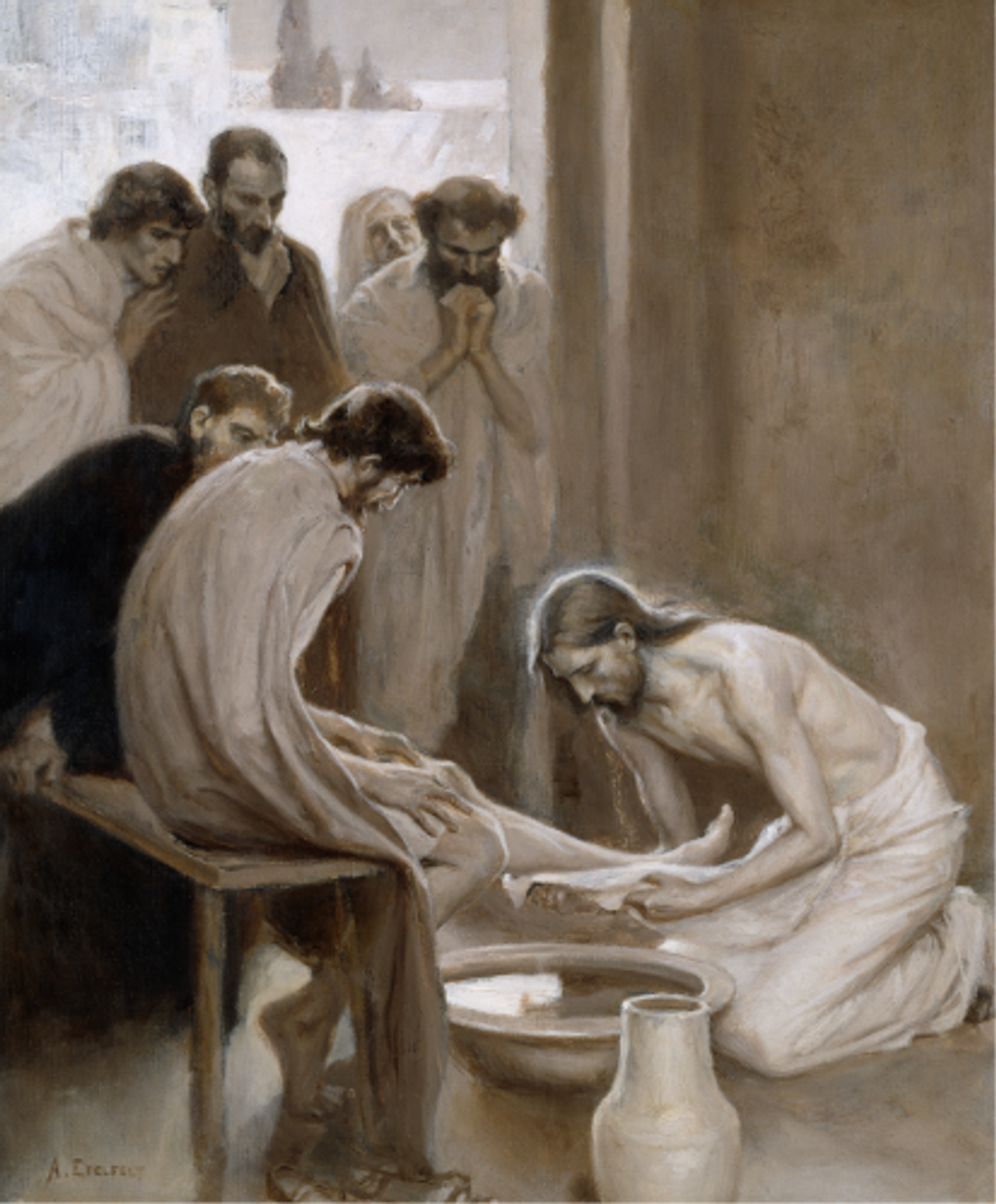
Imagine walking on dusty roads in sandals; it would make anyone’s feet quite dirty. Thus, washing someone’s feet upon their arrival to your house was a common way to show hospitality. You can see an example of this when Jesus was invited to the house of a Pharisee who did not offer to wash Jesus’ feet. Instead, a sinful woman came to Jesus and washed His feet with her tears and wiped them with her hair (Cf. Luke 7:44). Additionally, you can see in 1 Timothy 5:10 that washing another's feet is a good deed and is a hospitable thing to do. Washing one’s household guests’ feet showed good hospitality (or lack thereof, as in the case of the Pharisee), but it was normally a job for a household slave, not of the host. However, we see Jesus, the host at the Last Supper, the Son of God, giving us a model of humility and transforming washing another's feet into a symbol of Christian service (Cf. footnote at John 13:5).
Following this hospitality model, my husband and I should have washed the feet of all of the 250(ish) guests that we invited to celebrate at our wedding reception…Hmmm. Why wash only each other’s feet? That’s a great question; let’s try to answer it.
First we should look more closely at how the Lord washed His disciples’ feet in order to understand it better. John specifies that the Lord laid aside His garments to serve and afterward took them up again. The note for John 13:4, says that the garments are symbolic of Christ’s human life. John makes this clear, using the same Greek verbs in John 10:17-18, in which Jesus explains that He freely lays down His life and has the power to take it up again. In laying aside His garments, Jesus is, by His actions, showing that He is freely sacrificing Himself, His body, His life. At our wedding reception, we did not lay aside any garments to wash each other's feet (although I removed my pantyhose ahead of time). Nevertheless, this can be a life-long lesson in marriage: how we, like Christ, must freely choose to lay down our life for our spouse and choose it daily.
Now let's look closer at the example of heroic, humble service that Christ gave us in washing His disciples’ feet. Peter, at first, doesn’t want any part in Our Lord taking the lowly job of a servant to wash his own feet. Maybe it was because he felt too uncomfortable at the radical humility of God Himself washing his dirty, gross feet. But Jesus had been trying to prepare His disciples for this moment and ultimately for His death on the cross in saying He “came not to be served but to serve, and to give his life…” (Mark 10:45) and that He “emptied himself, taking the form of a servant… [and] he humbled himself and became obedient unto death, even death on a cross.” (Phil 2:7-8). These examples show how the greatest and most humble servant is the one who gives his life completely away. In marriage, this is the lesson we can learn from washing our spouse’s feet. In marriage, we promise to give our whole self to the other as a total self-gift.
The last part of the footnote on washing the disciples feet at John 13:5 says that, “The foot washing may be a sign of priestly ordination as in the OT (Ex 40:12, 30-32). Against this background, Jesus washing Peter and the disciples parallels the scene of Moses washing Aaron and his sons on the day of their consecration to the priesthood (Lev 8:6).” The footnote continues with similar parallels and mentions more on the institution of Holy Orders in the upper room. I wanted to mention this sacramental reading of the text as well so that you know of the further significance of the gesture. Of course, we do not intend to imitate ordination of priests at our wedding reception, having just received a different sacrament than the sacrament of holy orders. Rather, in washing each other's feet, we are simply following Christ’s example of service and living out the moral implications of His call to serve our spouse with our whole life as He has served us with His life.
When you are considering washing each other's feet, consider that one of the first things that you are doing after your wedding is imitating Christ. How beautiful and noble! You will remember this forever. A super cool bonus part of when we washed each other's feet at our wedding reception, that I didn’t realize until looking at the pictures, is the opportunity for evangelization because the visual example of mutual, humble love, and service is unmistakable. You are showing everyone the example of Christ’s humble service. Notice the children, the young adults, and even those already married watching and undoubtedly saying to themselves, “I want to serve like this too!” Furthermore, I promise, when you look back on the pictures of washing your husband’s (or wife’s) feet, you will immediately remember to serve your spouse just as Christ gave us the example to love and serve the Church His bride.
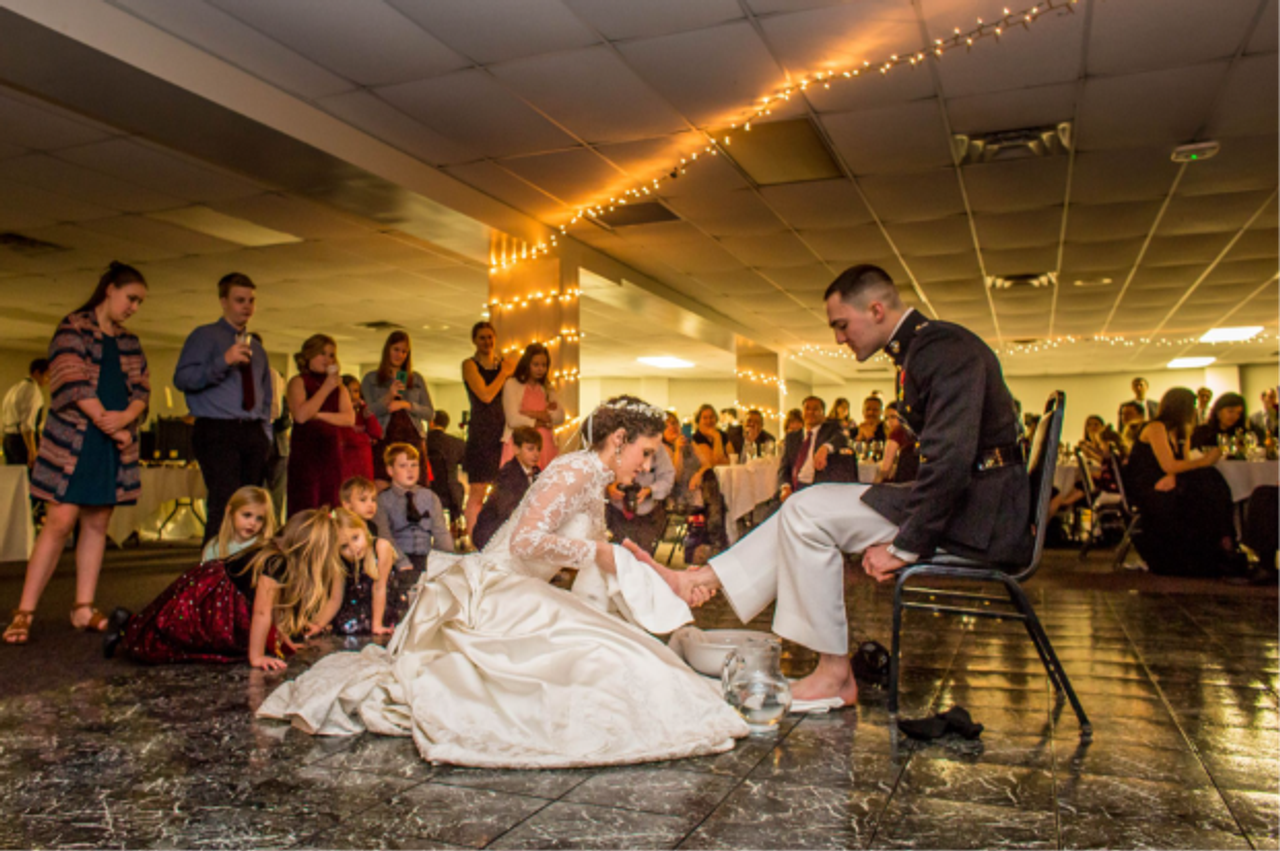
How can this be done practically speaking? Of all the planning you have pulled off for your wedding, this will be an easy one. My husband and I bought a pitcher (here’s an example), a large bowl (stone, ceramic, or plastic will do, and will prevent broken glass on the dance floor. Remember, the bowl should be large enough to fit your fiance’s feet and not tip over.) and two nice white towels (Pro tip: You can ask for these supplies at your bridal shower. When choosing, we imagined them being used in our future life together for drinks and a large punch bowl. But don’t tell anyone that our gross feet were in it!) The setup was simple: at the wedding reception, sometime just before our first dance, my maid of honor filled the pitcher with warm water and an essential oil for fragrance and put it next to the large bowl and two small towels on the dance floor. You can have one of the groomsmen be responsible for setting up a single chair. We had our DJ play the song Anointing at Bethany by Danielle Rose, which is about five minutes long. (I did have to remove my pantyhose in the bathroom beforehand). Then, my husband went first. He removed my shoes, washed and dried my feet and put my shoes back on. Then I did the same for him. If you have extra time before the song ends, as we did, then you can finish with a dance.
In closing, the least that we can do for Christ, who laid down His life in sacrifice for our sins, is to say, “Thank you Jesus” and to love those around us in return. My husband was a Marine when we met and was one for the first five years of our marriage (I know, I know: “Once a Marine, always a Marine”). Another slogan that we still use from my husband's time in the Marines is, “Thank you for your service.” If you are unfamiliar with it, it is something that you ought to say to any service member in uniform, and if you notice someone is a veteran, be sure to thank them for all of the many sacrifices that they have made in their time in the United States Military. Now, my husband and I have adopted, “Thank you for your service” as a way to say thank you to each other. It probably started when we were being silly, as it is occasionally accompanied by a funny salute. But it is also used in all seriousness as the most honest and deep thank you for every kind of simple or difficult task. Recently, we were seconds from getting to lay down to sleep for the night and then we heard our one-year-old cry as he woke up. As it is my job to help him to sleep, I started for him instead of my nice pillow. My husband, knowing the sacrifice of sleep I was about to make, said, “Thank you for your service.” In your relationship with your fiancé now and especially in your marriage, you will need to lay down your life as the members of the US military, as I did in forgoing sleep, and ultimately as Christ did on the cross. Be sure to thank your fiancé for every small sacrifice he makes and every single time he does something in service for you or for your future children.
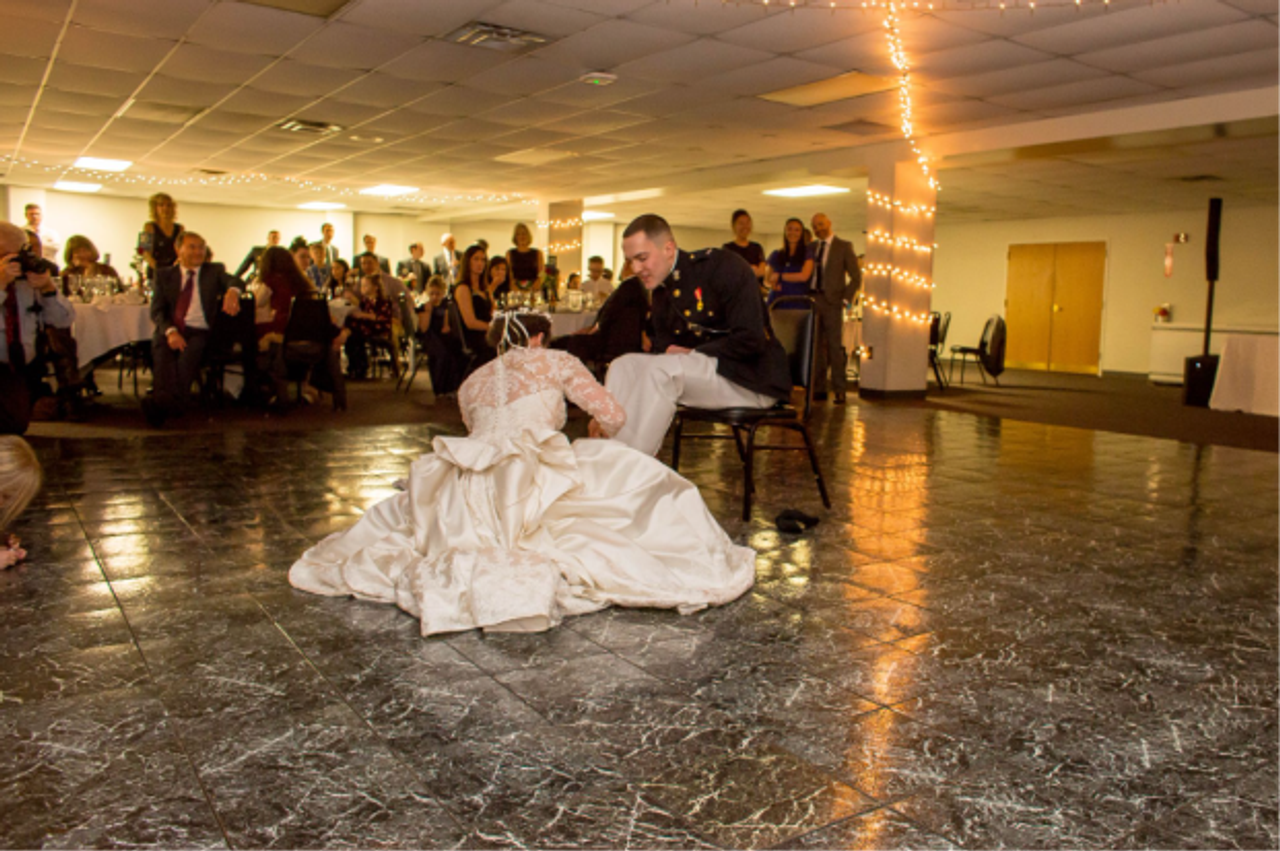
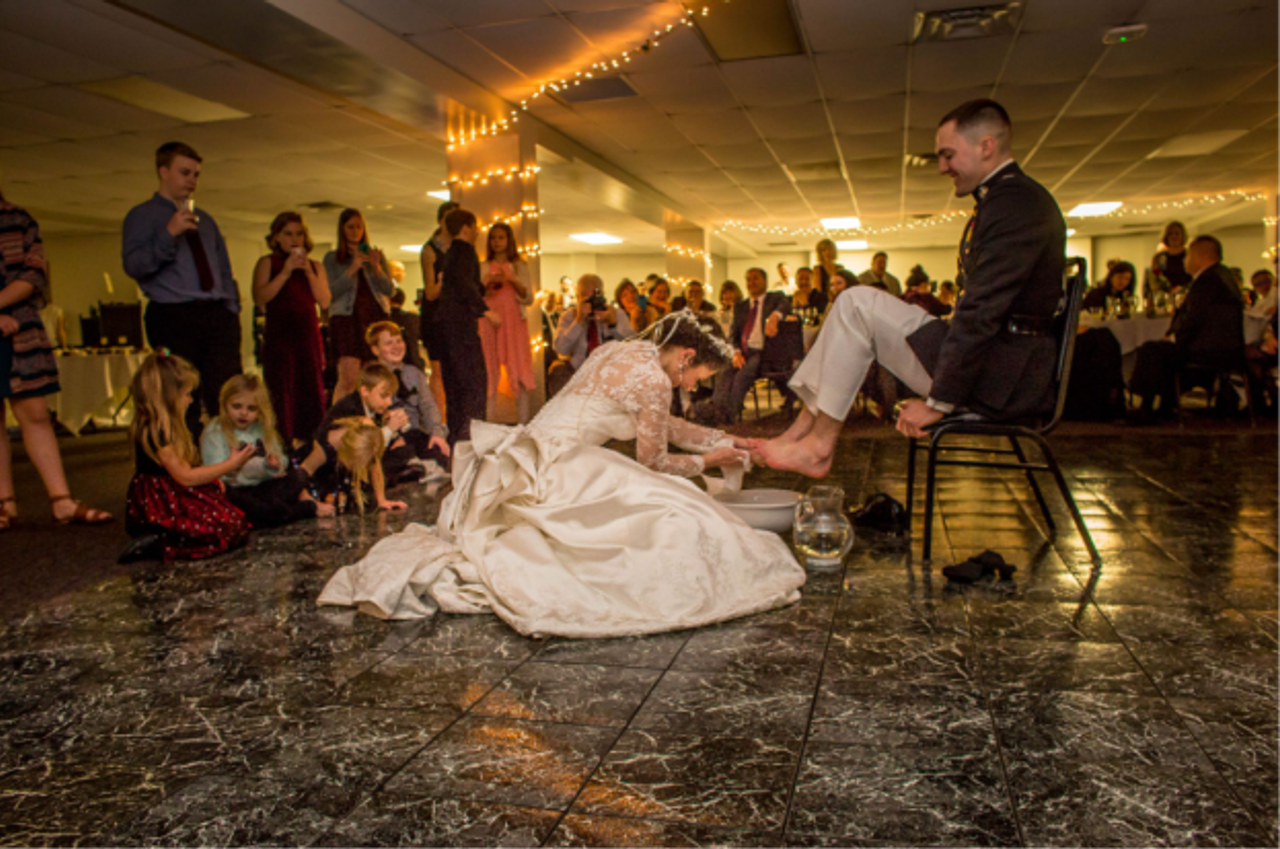
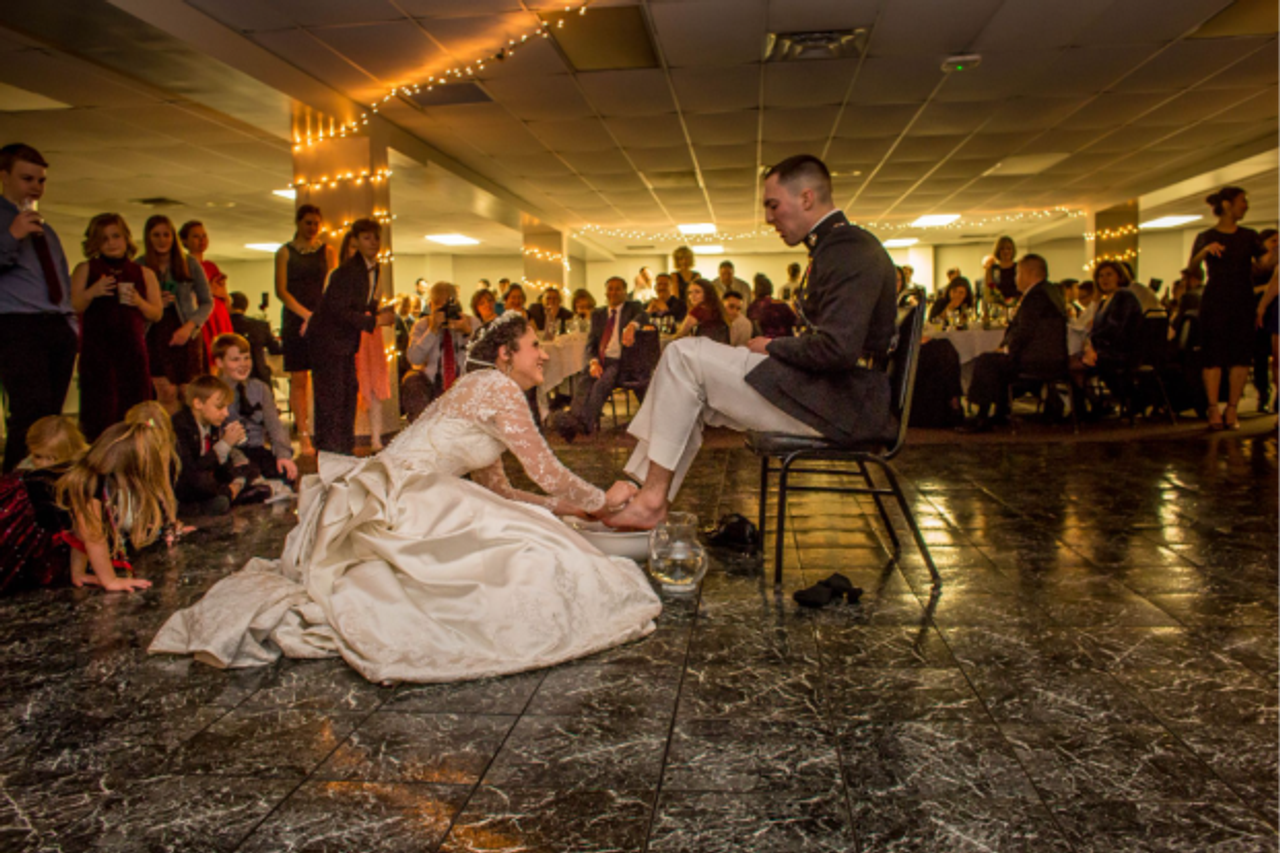
Here are a few more pictures for your enjoyment:
Anna at Cana
Married December 15, 2018 at Saint Patrick Church in Columbus, Ohio
Mother of three on Earth and 1 in heaven
PS. If you are engaged and have not yet signed up for Cana, sign up here! If you already have a wedding website with the other guys, don’t worry, there’s still time to switch :)
Disclaimer: We may earn a commission if you purchase through links in this article, at no extra cost to you. These links help us keep Cana free for all brides everywhere.